May 10, 2025 · Road Signs · 2 Min Read
NZ Road Code Signs Explained
Editorial Team
Author
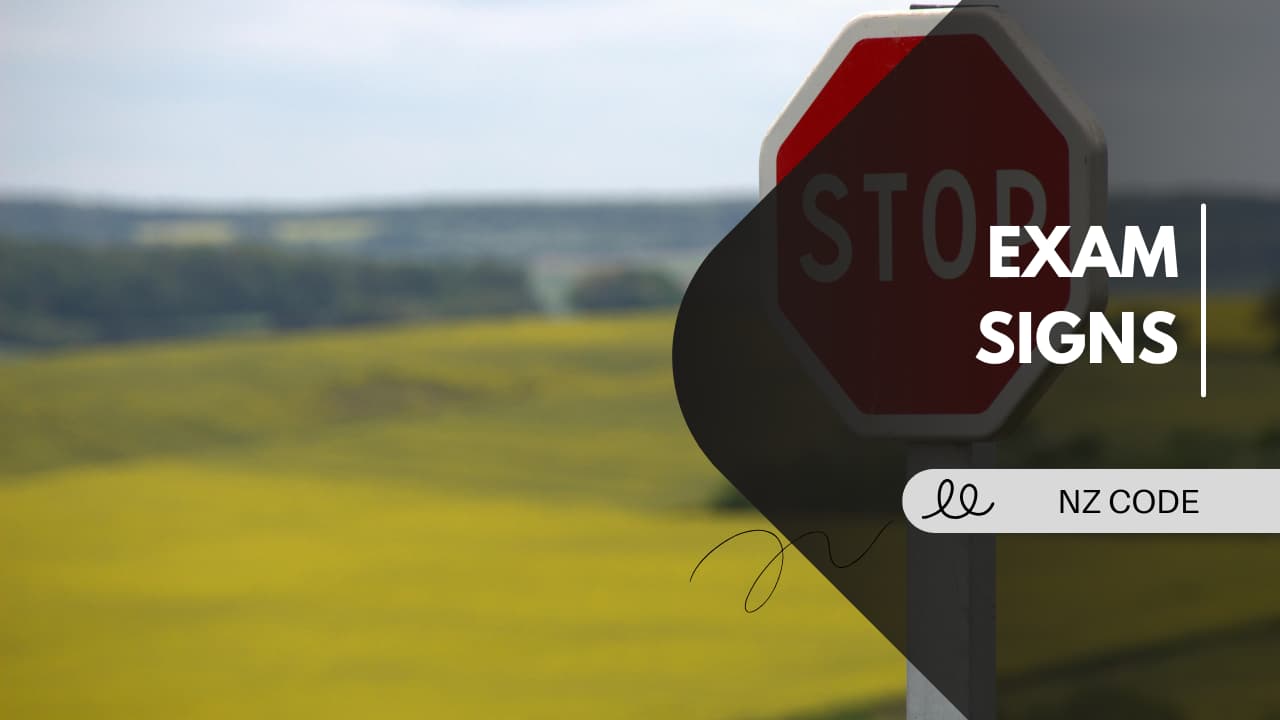
Confused by NZ road signs? Learn the difference between regulatory, warning, and information signs, plus tips to remember them for your theory test.
Road signs make up a large share of the questions on the New Zealand learner licence theory test, yet they're one of the areas learners find hardest to remember. The good news is that once you understand the system behind NZ road signs — how their shape and colour work together — recognising them becomes much easier.
The Three Main Types of Road Signs
Every sign on a New Zealand road falls into one of three categories:
- Regulatory signs tell you what you must or must not do — think Stop, Give Way, speed limits, and no-entry signs. These are legally enforceable.
- Warning signs alert you to hazards ahead, such as a sharp bend, slippery road, or pedestrian crossing. They're almost always diamond-shaped and yellow.
- Information and guide signs help you navigate — motorway exits, town names, hospitals, and visitor services. These are usually blue, green, or brown.
Common Signs That Trip Learners Up
A few sign pairs cause confusion again and again in practice tests:
- Give Way vs Stop — a Give Way sign (inverted triangle) means slow down and only proceed when it's safe; a Stop sign (octagon) means you must come to a complete stop, every time, even if the road looks clear.
- No Entry vs One Way — No Entry means that direction is closed to you entirely; One Way just tells you which direction traffic flows.
- School zone signs — these often come with variable speed limits at specific times of day, which is a detail learners frequently miss.
Why Shape and Colour Matter
NZ road signs are deliberately designed so you can identify their purpose at a glance, even before reading the words. Octagons mean stop. Inverted triangles mean give way. Diamonds mean warning. Circles usually mean a specific instruction or restriction. Learning to recognise the shape first, then the detail, is exactly how experienced drivers process signs in real time — and it's a skill the theory test rewards.
Tips to Remember Road Signs for Your Theory Test
- Study signs in groups by category (regulatory, warning, information) rather than all at once.
- Use flashcards or image-based practice questions instead of just reading descriptions.
- Pay attention to signs you actually pass on the road — real-world repetition helps them stick.
- Revisit any sign you get wrong in practice at least twice more before moving on.
Practice Road Signs Online for Free
The fastest way to lock in road signs before your test is to practice with real, image-based questions. Our free NZ Road Signs practice test covers regulatory, warning, and information signs with instant feedback and explanations, so you know exactly why an answer is right or wrong. You can also browse all our free NZ Road Code practice tests to keep building your knowledge before test day.
Recent blog & articles
Fresh ideas, insightful stories, and the latest updates.
Free NZ Road Code Practice Tests
How to get the most from free NZ Road Code practice tests: a simple plan using topic tests, explanations and 35-question mock exams to reach 32 out of 35.
NZ Class 2 Heavy Vehicle Theory Test
Preparing for the NZ Class 2 heavy vehicle theory test: what the extra heavy-vehicle questions usually cover, and how to practise with free tests.